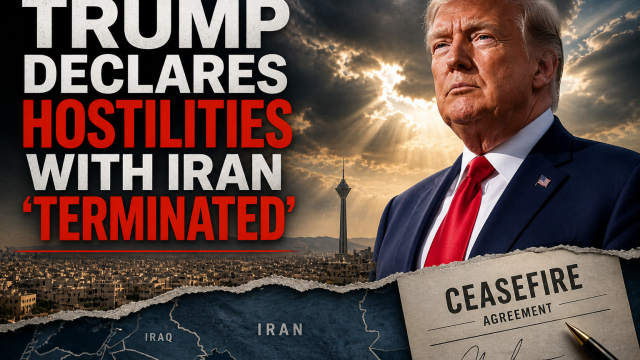
Trump Declares Hostilities with Iran ‘Terminated’
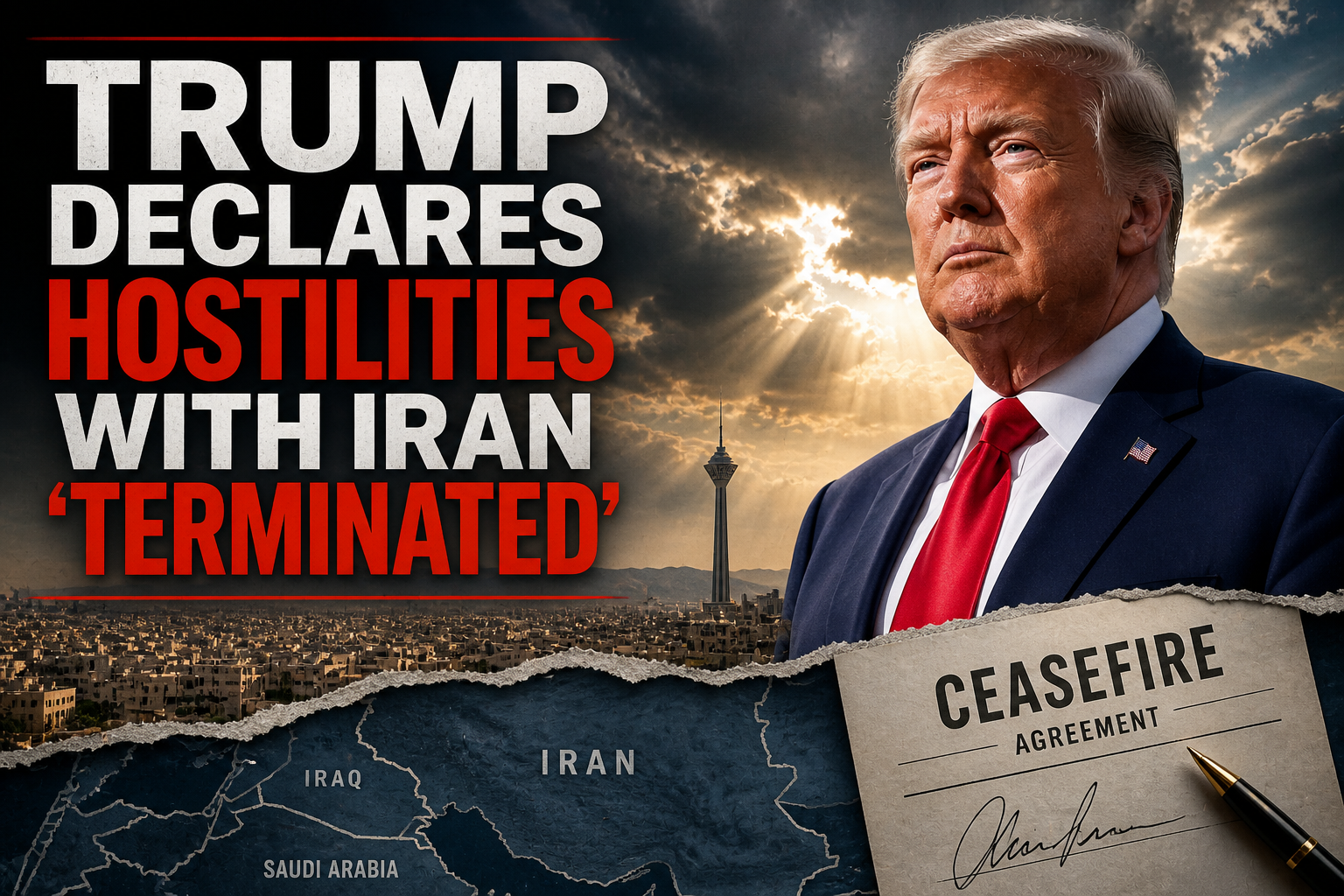
Trump Declares Hostilities With Iran ‘Terminated’
Former President Donald Trump’s recent statement declaring that hostilities with Iran are “terminated” is drawing significant attention as tensions in the Middle East remain a central concern for global stability. For Christians watching current events through the lens of Bible prophecy, developments involving Iran, the United States, and the broader Middle East are especially important, as Scripture repeatedly points to this region as a focal point in the last days.
According to reporting, Trump announced that active hostilities between the United States and Iran have effectively ended, signaling a potential shift in one of the world’s most volatile geopolitical flashpoints.
(Reference: Trump Declares Hostilities With Iran ‘Terminated’ → https://www.thegatewaypundit.com/2026/05/trump-declares-hostilities-iran-terminated/)
A Significant Development in Middle East Tensions
What Has Been Reported
The statement suggests a de-escalation in what has been an ongoing cycle of confrontation between the U.S. and Iran, including military threats, proxy conflicts, and heightened rhetoric. While details remain limited, the declaration indicates a pause—or possible end—to direct hostilities at this time.
Iran has long been a central player in Middle East conflict, with influence extending into nations such as Iraq, Syria, Lebanon, and Yemen. Any shift in U.S.-Iran relations has ripple effects across the region, particularly in relation to Israel and broader regional alliances.
This announcement comes amid continued global concern over nuclear ambitions, regional instability, and the potential for broader conflict.
Iran’s Role in Bible Prophecy
A Nation to Watch
From a biblical perspective, Iran—historically known as Persia—holds a notable place in prophetic Scripture. The book of Daniel references Persia as a significant kingdom (Daniel 8), and many Bible prophecy teachers point to Ezekiel 38, where Persia is listed among nations involved in a future coalition.
While it is important not to draw premature conclusions, the ongoing prominence of Iran in global affairs aligns with the biblical pattern of Middle Eastern nations playing key roles in end-time events.
Jesus warned in Matthew 24 that there would be “wars and rumors of wars,” reminding believers that geopolitical tensions are part of the broader prophetic landscape.
What This Means—and What It Doesn’t
A Pause, Not a Resolution
While the declaration of “terminated” hostilities may signal a cooling of tensions, it does not necessarily mean a lasting peace has been established. The Middle East has seen cycles of escalation and de-escalation for decades.
Key questions remain:
- Is this a temporary pause or a long-term shift in policy?
- How will Iran respond in both rhetoric and action?
- What impact will this have on Israel and surrounding nations?
These uncertainties highlight the fragile nature of peace in the region.
The Bigger Picture: Peace Efforts and Prophetic Context
Watching Without Speculation
Scripture speaks of a future time when peace agreements and alliances will play a central role in end-time events (Daniel 9:27). While it would be inappropriate to directly link this announcement to any specific prophecy, it does reflect an ongoing pattern: efforts to manage or resolve conflict in the Middle East.
Believers should be cautious not to overinterpret individual headlines, while still recognizing the broader trajectory of global diplomacy and regional instability.
For deeper understanding of how Middle East events connect to Bible prophecy, readers can explore Endtime Ministries’ teachings on the Middle East and prophecy → https://www.endtime.com or watch detailed analysis on End of the Age+ streaming platform → https://watch.osn.tv.
What Christians Should Be Watching
Discernment in a Changing Landscape
As global tensions shift, Christians are called to remain alert, informed, and grounded in Scripture. Developments involving Iran, Israel, and major world powers should be observed carefully, not with fear, but with understanding.
The Apostle Paul wrote in 1 Thessalonians 5:6, “Therefore let us not sleep, as do others; but let us watch and be sober.” This instruction is especially relevant in times of geopolitical uncertainty.
A Call to Prayer and Confidence in God’s Plan
While headlines may suggest progress or peace, Scripture reminds us that ultimate peace will not come through human agreements alone. True and lasting peace will only be established through the return of Jesus Christ.
In the meantime, believers are called to pray—for leaders, for peace in the Middle East, and for wisdom and discernment in navigating these times.
No matter how global conflicts evolve, God’s prophetic timeline remains intact. His sovereignty is not shaken by political developments, and His promises will be fulfilled.
As events continue to unfold, Christians can remain confident—not in shifting geopolitical alliances—but in the unchanging Word of God.

 https://www.endtime.com/wp-content/uploads/2026/05/ChatGPT-Image-May-4-2026-at-06_48_26-PM.png
1024
1536
Mika Harris
https://www.endtime.com/wp-content/uploads/2022/08/Endtime-Small-Logo-Blue.png
Mika Harris2026-05-04 19:07:382026-05-04 19:07:38Trump Declares Hostilities with Iran ‘Terminated’
https://www.endtime.com/wp-content/uploads/2026/05/ChatGPT-Image-May-4-2026-at-06_48_26-PM.png
1024
1536
Mika Harris
https://www.endtime.com/wp-content/uploads/2022/08/Endtime-Small-Logo-Blue.png
Mika Harris2026-05-04 19:07:382026-05-04 19:07:38Trump Declares Hostilities with Iran ‘Terminated’ https://www.endtime.com/wp-content/uploads/2026/05/shutterstock_2434817449.jpg
561
1000
Mika Harris
https://www.endtime.com/wp-content/uploads/2022/08/Endtime-Small-Logo-Blue.png
Mika Harris2026-05-04 18:40:322026-05-04 18:40:32Rome Diocese Advances Christian-Muslim Dialogue at Prominent Mosque
https://www.endtime.com/wp-content/uploads/2026/05/shutterstock_2434817449.jpg
561
1000
Mika Harris
https://www.endtime.com/wp-content/uploads/2022/08/Endtime-Small-Logo-Blue.png
Mika Harris2026-05-04 18:40:322026-05-04 18:40:32Rome Diocese Advances Christian-Muslim Dialogue at Prominent Mosque https://www.endtime.com/wp-content/uploads/2026/05/shutterstock_2362709657.jpg
667
1000
Mika Harris
https://www.endtime.com/wp-content/uploads/2022/08/Endtime-Small-Logo-Blue.png
Mika Harris2026-05-04 13:32:292026-05-04 13:32:29Faith Groups Turn to Founding Documents to Reinforce Democratic Values
https://www.endtime.com/wp-content/uploads/2026/05/shutterstock_2362709657.jpg
667
1000
Mika Harris
https://www.endtime.com/wp-content/uploads/2022/08/Endtime-Small-Logo-Blue.png
Mika Harris2026-05-04 13:32:292026-05-04 13:32:29Faith Groups Turn to Founding Documents to Reinforce Democratic Values
Leave a Reply