Faith Leaders Turn to Founding Documents in Effort to Strengthen Democracy
As the United States approaches its 250th anniversary, a growing coalition of religious leaders is turning to America’s founding documents in an effort to reinforce democratic values. For Christians watching world events through the lens of Bible prophecy, this development raises important questions about the role of religion in civic life—and how faith is increasingly intersecting with governance in the modern era.
According to recent reporting, interfaith groups across the nation are participating in a new initiative aimed at studying foundational American texts, including the Declaration of Independence and the Constitution, in hopes of fostering unity and restoring confidence in democratic institutions.
(Reference: Faith groups seek out founding documents in bid to rescue democracy → https://religionnews.com/2026/04/20/ahead-of-the-250th-us-faith-groups-study-founding-texts-in-quest-to-rescue-democracy/?utm_source=chatgpt.com)
A Growing Interfaith Effort
Faith250 and the Push for Unity
The initiative, often referred to as “Faith250,” brings together leaders from various religious traditions—Christian, Jewish, Muslim, and others—to examine the moral and philosophical foundations of the United States. Organizers say the goal is to encourage civic engagement and rediscover shared values that can help stabilize a deeply divided society.
Participants are studying historic texts while hosting discussions, public forums, and community gatherings. The emphasis is not on theological agreement, but on identifying common ethical principles such as justice, human dignity, and freedom.
This reflects a broader global trend: interfaith cooperation is no longer limited to dialogue—it is increasingly tied to social, political, and even governmental outcomes.
Religion and Governance: A Converging Path
A Shift Toward “Shared Values”
While efforts to promote unity and civic responsibility may appear positive on the surface, they also highlight a significant shift. Religious collaboration is moving beyond spiritual matters and into the realm of governance and public policy.
Scripture reminds us that unity, while valuable, must be rooted in truth. In Genesis 11, the account of the Tower of Babel shows humanity uniting with a common purpose—but apart from God’s will. Likewise, Revelation 13 describes a future system where global unity—political and religious—plays a central role in end-time events.
This does not mean every interfaith initiative fulfills prophecy. However, it does underscore a pattern: increasing cooperation across religious lines in pursuit of global or national solutions.
What This Means for Bible Prophecy
Watching the Trend Without Overreaching
Jesus warned in Matthew 24 that deception would increase in the last days. Part of that deception could involve movements that appear to promote peace and unity but ultimately blur essential doctrinal truths.
At the same time, Scripture also affirms the importance of righteous governance and moral order (Romans 13). The challenge for believers is to discern the difference between healthy civic engagement and movements that may lead toward a compromised or syncretistic faith.
For more biblical insight on how global trends connect to prophecy, readers can explore Endtime Ministries’ prophecy resources → https://www.endtime.com as well as streaming teachings on End of the Age+ → https://watch.osn.tv.
What We Know—and What We Don’t
Clear Developments
- Interfaith collaboration is increasing in both scope and influence
- Religious leaders are engaging more directly with civic and political issues
- There is a growing emphasis on shared moral frameworks over doctrinal distinctions
Unanswered Questions
- How far will these partnerships extend into policy or governance?
- Will theological differences continue to be minimized in favor of unity?
- Could such efforts contribute to broader global religious alignment in the future?
These are not conclusions—but they are trends worth watching.
A Call for Discernment and Prayer
As Christians, we are called to be both informed and discerning. Efforts to promote unity, justice, and moral responsibility are not inherently wrong. However, unity that comes at the expense of biblical truth must be approached with caution.
The Apostle Paul warned in 2 Corinthians 11:14 that even deception can appear as light. That is why believers must remain grounded in Scripture, testing every movement against the Word of God.
In a time when religion and governance are increasingly intersecting, the Church must remain clear in its message and steadfast in its mission.
Above all, we can take comfort in knowing that God is sovereign. No matter how global systems evolve, prophecy assures us that His plan will prevail. Our responsibility is to stay watchful, prayerful, and faithful in the days ahead.



 https://www.endtime.com/wp-content/uploads/2026/05/shutterstock_2362709657.jpg
667
1000
Mika Harris
https://www.endtime.com/wp-content/uploads/2022/08/Endtime-Small-Logo-Blue.png
Mika Harris2026-05-04 13:32:292026-05-04 13:32:29Faith Groups Turn to Founding Documents to Reinforce Democratic Values
https://www.endtime.com/wp-content/uploads/2026/05/shutterstock_2362709657.jpg
667
1000
Mika Harris
https://www.endtime.com/wp-content/uploads/2022/08/Endtime-Small-Logo-Blue.png
Mika Harris2026-05-04 13:32:292026-05-04 13:32:29Faith Groups Turn to Founding Documents to Reinforce Democratic Values https://www.endtime.com/wp-content/uploads/2018/04/UTE-9-960×300-sans-button.jpg
300
960
John Little
https://www.endtime.com/wp-content/uploads/2022/08/Endtime-Small-Logo-Blue.png
John Little2026-05-04 09:52:192026-05-04 09:52:19Truth Over Sensation: Understanding the Mark of the Beast Before It’s Too Late
https://www.endtime.com/wp-content/uploads/2018/04/UTE-9-960×300-sans-button.jpg
300
960
John Little
https://www.endtime.com/wp-content/uploads/2022/08/Endtime-Small-Logo-Blue.png
John Little2026-05-04 09:52:192026-05-04 09:52:19Truth Over Sensation: Understanding the Mark of the Beast Before It’s Too Late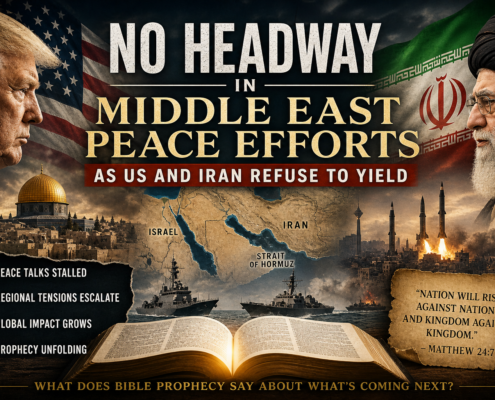 https://www.endtime.com/wp-content/uploads/2026/05/ChatGPT-Image-May-1-2026-at-12_33_19-PM.png
1024
1536
Mika Harris
https://www.endtime.com/wp-content/uploads/2022/08/Endtime-Small-Logo-Blue.png
Mika Harris2026-05-01 12:39:442026-05-01 12:39:44No headway in Middle East peace efforts as US and Iran refuse to yield
https://www.endtime.com/wp-content/uploads/2026/05/ChatGPT-Image-May-1-2026-at-12_33_19-PM.png
1024
1536
Mika Harris
https://www.endtime.com/wp-content/uploads/2022/08/Endtime-Small-Logo-Blue.png
Mika Harris2026-05-01 12:39:442026-05-01 12:39:44No headway in Middle East peace efforts as US and Iran refuse to yield
Leave a Reply